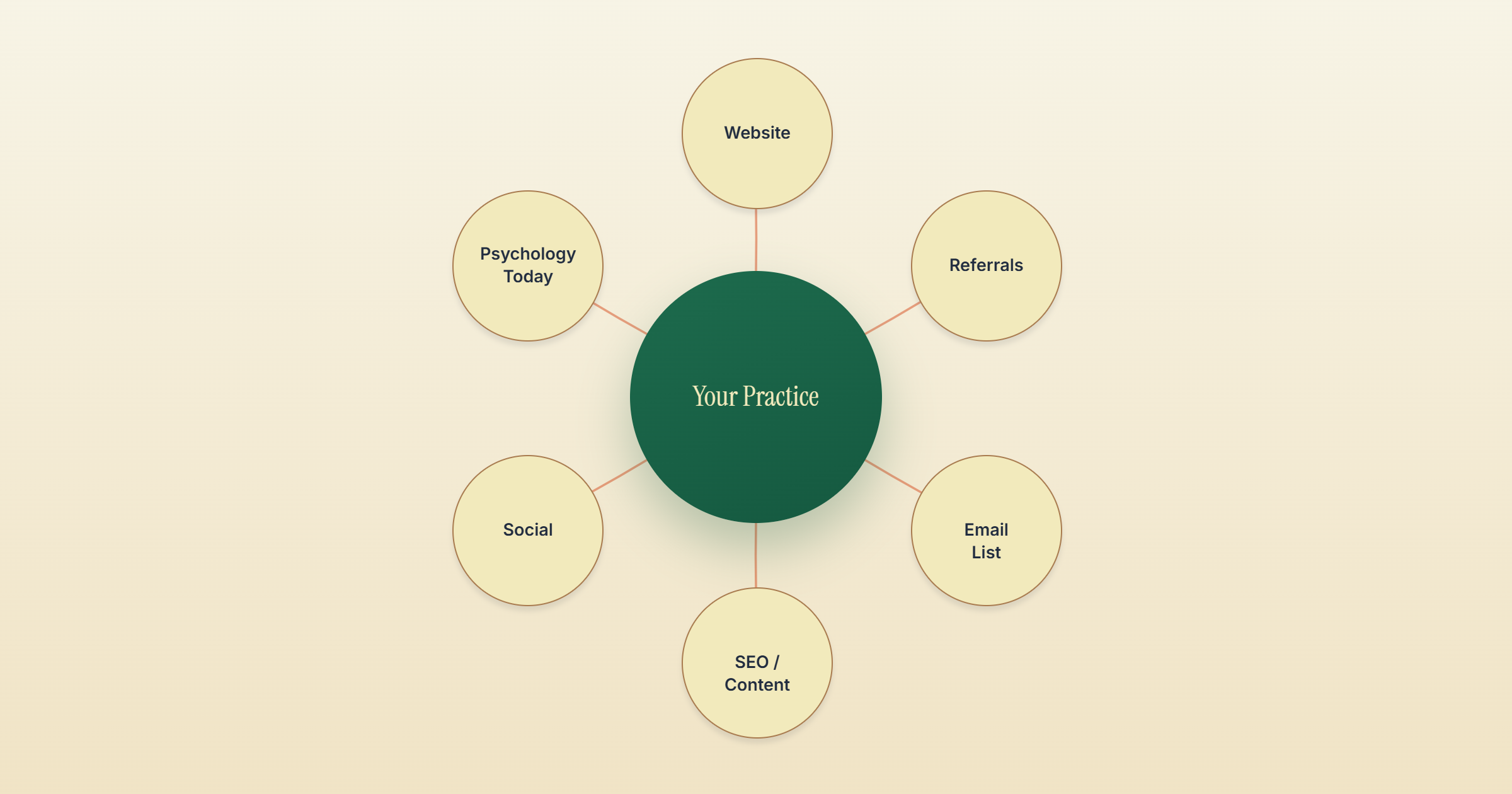
If you're a therapist in Canada trying to figure out where to put your marketing energy, here's a shortcut: start with your website. Not your Instagram, not your directory profile, your website. It's the one piece of your online presence you fully own, and it's the piece that ends up doing the most work if you set it up right.
Here's what that actually looks like in practice.
Your Website Is the One Channel You Actually Control
Referrals, directories, social media, all of it eventually funnels somewhere. If that somewhere is a thin, generic site, you're leaking the value of every other marketing effort you make. A referral is a warm handoff. A directory click is a cold one. Either way, your website is where that person decides whether to actually reach out.
This matters even more if you're relying on Psychology Today or a similar directory as your main source of new clients. A directory listing puts you in front of people already searching, but you don't control the layout, the branding, or what happens after someone clicks away. Your website is the piece you own outright, and it's worth treating that way.
What Makes a Visitor Actually Book, Not Bounce
Most therapist websites lose people in the same three spots: an unclear first impression, a bio that reads like a resume instead of a reason to trust you, and a booking process that takes too many clicks to find.
A few fixes that consistently make a difference:
- Lead with what a visitor needs to know in the first few seconds: who you help, and what changes for them.
- Write your bio like you're introducing yourself to a nervous new client, not listing credentials for a colleague.
- Make the "book a consultation" step obvious on every page, not buried three menus deep.
None of this requires a redesign. It requires looking at your site the way a first-time visitor would, not the way you do after staring at it for two years.
SEO You Own vs. Visibility You Rent
A directory ranking works until it doesn't. Algorithms shift, competition grows, and some directories now charge for the visibility that used to be free. None of that is in your control.
A website that ranks for your own name, your specialty, and your city keeps working regardless of what any directory does next. It's slower to build, but it compounds instead of resetting every time a platform changes its rules.
Your Website as a Content Engine, Not Just a Brochure
A static site with a homepage, an about page, and a contact form does the bare minimum. A site that answers real questions, what a first session looks like, how virtual therapy works, what the difference is between a psychotherapist and a psychologist, keeps attracting the right people long after you've stopped actively promoting it.
This doesn't mean a full blog calendar. Even a well-built FAQ section or two or three genuinely useful articles can do this. The goal is a website that keeps working for you between client sessions, not one that only matters the week you launch it.
Owning Your Own Data
This one's easy to overlook. If your leads come mostly through directories, you're guessing at what's actually working. A website you own can be connected to real analytics, so you can see where bookings actually come from, which pages people read before they reach out, and what's worth doing more of.
That kind of visibility is the difference between marketing by instinct and marketing with actual feedback.
Real Canadian Practices Doing This Well
KaZa Family Centre: After launching their website, inquiries picked up enough that Nadia could shift from reacting day to day to actually planning ahead, staffing, scheduling, and growth decisions built around real demand instead of guesswork. See the KaZa Family Centre case study →
Monica Dosanjh: Her website became the central hub for her marketing, running ads and offering courses from one place instead of juggling scattered platforms and links. See the Monica Dosanjh case study →
Acquah Counseling: Magdalene used her website to target specific areas through search, which let her grow the practice in the geographic areas she actually wanted to reach. See the Acquah Counseling case study →
The Takeaway
Your website isn't a line item to check off once. It's the one piece of your marketing you actually control, and it's worth treating as leverage, not decoration.