If you're an African Canadian(Black) therapist, the case for finding a culturally matched provider isn't hypothetical, it shows up in the research. Surveys have found that a majority of Black Canadians say they'd be more willing to use mental health services if the provider were Black. That single fact is a big part of why the directories, networks, and research initiatives below exist, and why building a strong, findable online presence matters as much for this work as anything else in your practice.
Here's a rundown of what's out there, and a few thoughts on where your own website fits into the picture.
Directories Built Specifically for This Community
General directories like Psychology Today let clients filter by category, but a handful of platforms were built from the ground up around this exact need:
- Black Therapist List and Black Therapy, both Canadian directories connecting clients directly with Black therapists.
- Healing in Colour, a BIPOC-focused directory where every listed practitioner agrees to a stated commitment to anti-oppressive practice. Several therapists on the platform describe it as their primary source of new client referrals.
- Inclusive Therapists, a broader social-justice-oriented directory with a dedicated Canada section, including Toronto.
- Black Healthcare Professionals Network (BHPN), a Black-led network whose public directory covers registered clinical psychologists and other health professionals, launched in Ontario.
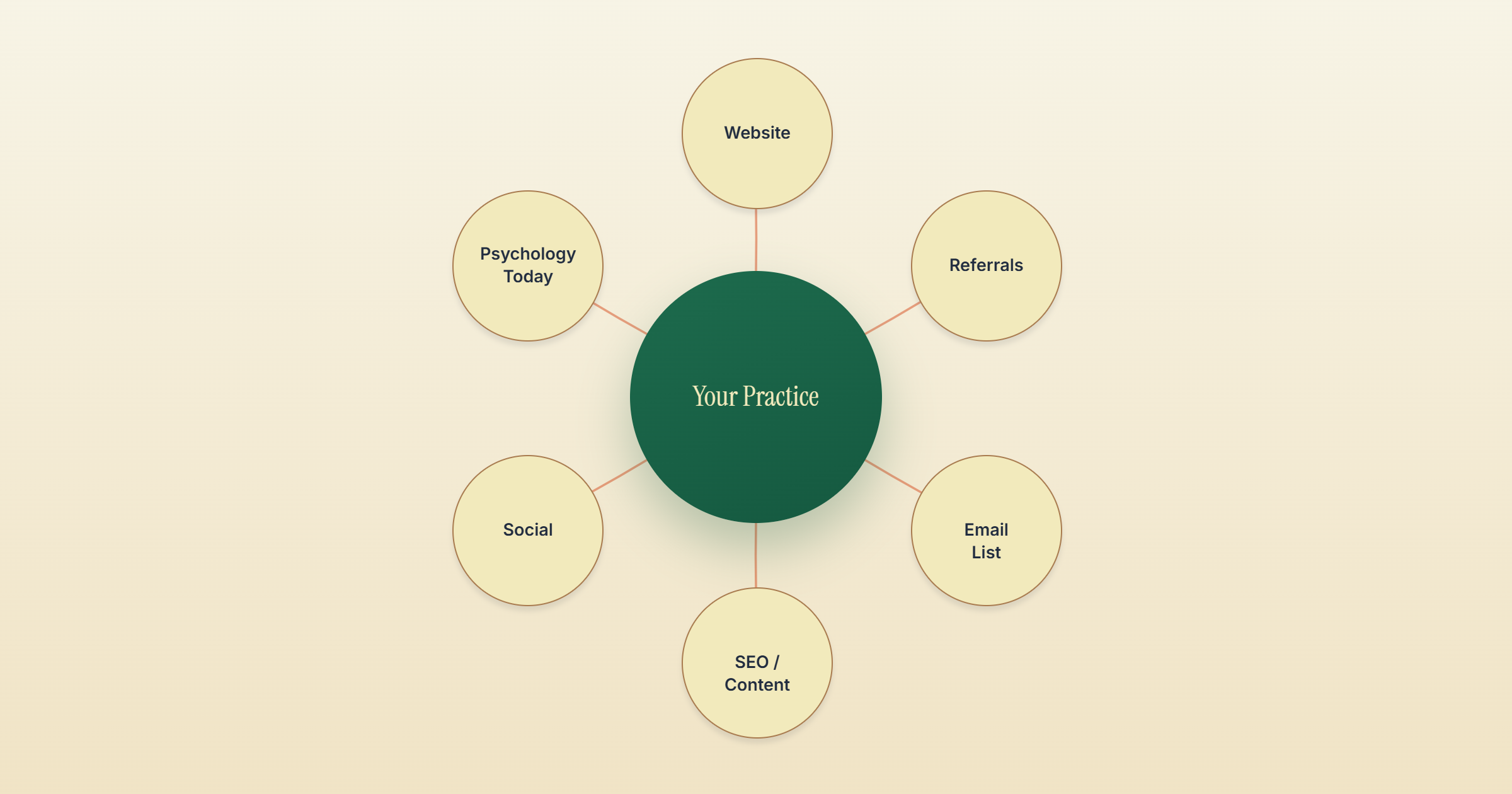
Being listed on one or more of these is worth doing. But the same principle that applies to Psychology Today applies here too: a directory gets you found, it doesn't control how you're presented once someone clicks through, and it can't do anything for you once that listing stops converting.
Professional Networks and Advocacy Organizations
Beyond directories, there's a growing set of organizations built specifically to support Black mental health professionals and the communities they serve:
- Black Wellness Network, led by TAIBU Community Health Centre, a national network connecting practitioners, researchers, and the public around Black mental health, grown out of a federal initiative through the Public Health Agency of Canada.
- Black Mental Health Canada (BMHC), a Toronto-based nonprofit building a network of clinicians focused on the mental health needs of Black communities.
- Black Mental Health Connections Montreal (BMHC MTL), the same idea for Montreal's English-speaking Black community.
- Section on Black Psychology, part of the Canadian Psychological Association, worth knowing about since it reflects recognition from inside the country's main psychology body, not just standalone community organizing.
These aren't just referral sources. They're also where a lot of professional community and support happens, worth connecting with even outside of a marketing lens.
Research and Training Resources
A couple of institutions are doing serious work in this space that's worth knowing about, whether for your own continuing education or simply as evidence for why this focus matters:
- Interdisciplinary Centre for Black Health (ICBH) at the University of Ottawa, Canada's first academic research centre dedicated entirely to Black health.
- The Black Health Primer, a self-paced continuing education course from the Black Health Education Collaborative on Black health and anti-Black racism within the Canadian healthcare system.
Where Your Website Fits Into All of This
None of the above replaces having your own website. If anything, it makes one more important, not less.
Here's why: a directory listing puts you in a category. Your website is where a prospective client actually gets a feel for who you are, whether your approach fits what they're looking for, and whether they feel comfortable reaching out. That's especially true in this space, since the decision to seek out a Black therapist specifically is already a deliberate, considered one for most clients. They're not casually browsing, they're looking for a real fit, and your website is where that impression actually gets made or lost.
A strong website also means you're not entirely dependent on any single directory's algorithm, pricing changes, or policy shifts. You control your own bio, your own presentation, and your own path from "found me" to "booked a consultation."
The Takeaway
The directories and networks above are genuinely useful, and worth being part of. But they work best alongside a website that's actually built to convert the people they send your way, not instead of one.
If you're building or rebuilding your own online presence and want a second set of eyes on how it's presenting you, that's exactly the kind of conversation a discovery call is for.